
On observing, knowing, and learning to care.
I recently watched a short excerpt from an interview with the educator José Pacheco, where he told a story about Vivaldi and a group of children. It stayed with me.
From what I understood, he had been invited to teach music to children and, instead of choosing the children’s songs that are usually played in these contexts, he began playing Vivaldi. Some people found it strange. Perhaps even uncomfortable. After all, it was not the music “expected” for children.
But he continued.
After a few days, for some reason, the music was not playing. And that was when he found a group of children playing in a circle and singing a melody by Vivaldi.
They had heard it. They had kept it. They had made that music part of their play.
The sentence that came with this excerpt was simple:
We only love what we know.
I also thought of Fernando Pessoa:
First we find it strange, then it becomes part of us.
I have been thinking about this a lot in our own space.
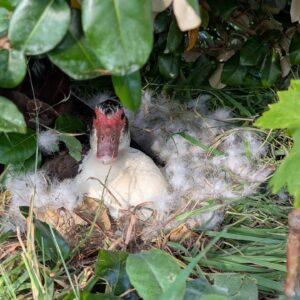
There are experiences a child may not choose at first, simply because they do not yet know them: Vivaldi’s music, walking barefoot on the grass, holding a woodlouse, touching a freshly laid egg, recognising a plant by its smell, hammering a nail, observing a snail without rushing.
Perhaps, at first, these things feel strange. But with time, care, context, and freedom, some of them begin to settle inside.
When we talk about respecting a child’s interests, this feels very important to me. Following the child does not mean limiting the world to what the child already knows. The adult also has a role in opening doors, preparing encounters, offering possibilities.
Then, we observe.
What draws the child in?
What do they avoid?
What do they return to?
What do they repeat?
What do they turn into play?
What begins to live inside them?
At Alo Lira: Garden Explorers, we want children to know nature up close, with enough time for it to stop being a backdrop and become a relationship.
Before asking a child to care for nature, perhaps we need to give them time to know it. Not as a big and distant idea, but as a concrete presence: this tree, this leaf, this bee, this snail, this soil after the rain, this place that changes every day.
Who knows — after getting to know snails, learning about their relationship with the rest of the garden and their life cycle, children may feel a special pleasure in discovering how to draw Fibonacci spirals for their shells, while hearing stories about who Fibonacci was.
Perhaps an old song gains a new meaning:
Snail, snail,
put your little horns in the sun.
And suddenly, the snail is no longer only a small animal that appeared on the path. It is a living being with a curious body, a beautiful shape, a place in the garden, a story, a relationship with moisture, with plants, with soil, with time.
This is how curiosity can open.
What is the role of the cicada?
How does pollination happen?
Why do bees’ honeycombs have a hexagonal shape?
How can we find North without a compass?
What kind of animal is a bee, after all?
Nature can inspire art, language, science, mathematics, physics, geography, history, biology. But before all of that, it can be an encounter.
We want to prepare a rich, living, caring environment where the child can meet new things and approach them at their own rhythm, without forcing a love of nature or creating artificial academic connections.
Research on nature connection has been pointing in this direction: meaningful contact with the natural world is associated with wellbeing, a sense of belonging, and caring environmental behaviours. And this connection does not grow only from knowing names or facts. It also grows through contact, beauty, emotion, meaning, and compassion.
This makes sense to me.
It is difficult to care deeply for something we have never touched, observed, smelled, waited for, or helped to grow.
So perhaps our work begins here: creating conditions for the child to encounter the living world through music, soil, small creatures, plants, questions, and surprise.
At first, perhaps it feels strange. Then, with luck and time, it settles inside. And when it settles inside, care may also begin to grow.
At Alo Lira: Garden Explorers, we prepare these encounters with intention: nature, music, meaningful work, freedom, care, and time.
If you would like your child to experience this, come and try a session with us.
 English
  Portuguese