
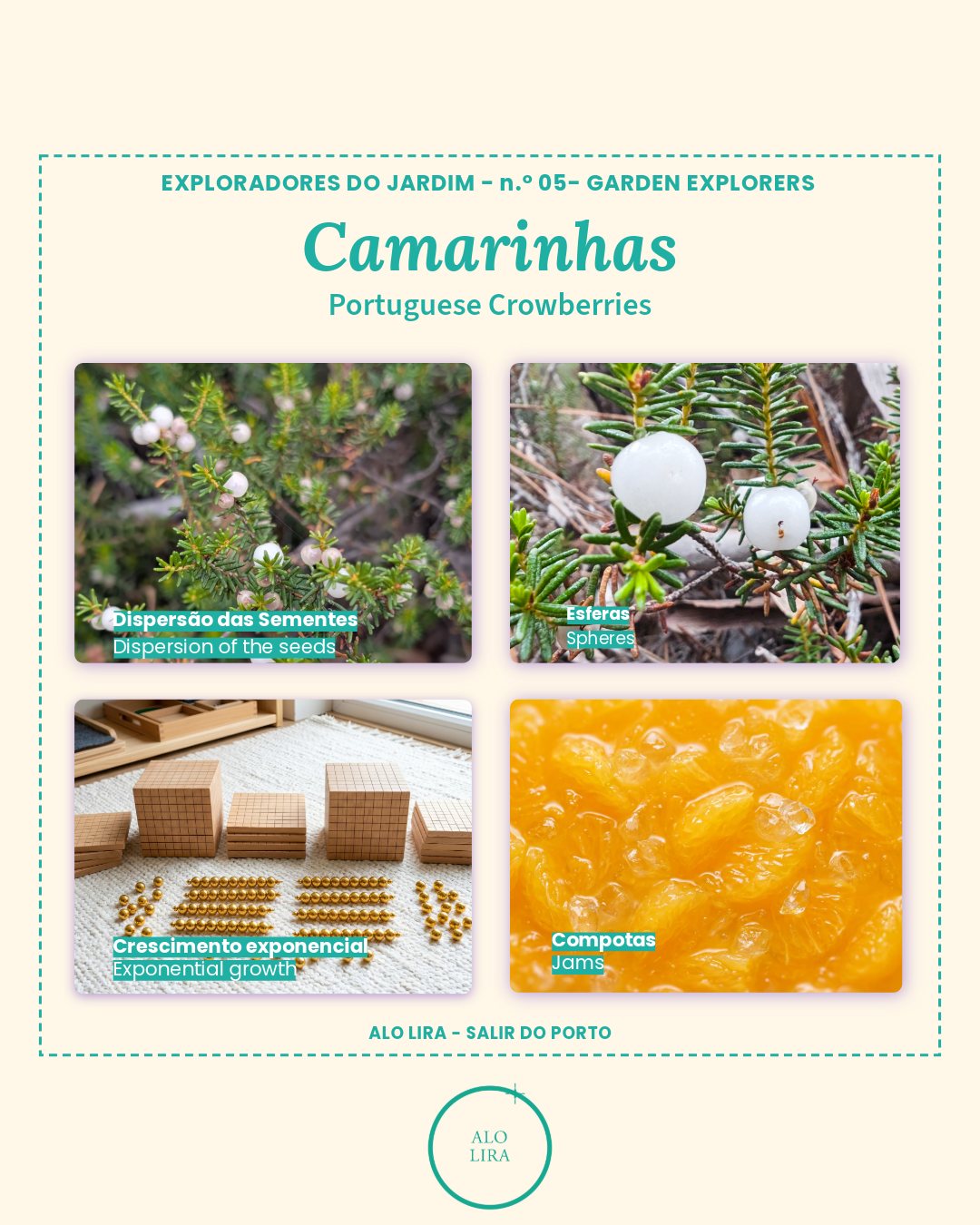
The camarinhas are ready to eat.
They are small, white, sweet, delicate, and very special. They are not easy to find, so we feel very lucky to have them growing here at Alo Lira.
For Garden Explorers, a plant like this can open so many paths. First comes the encounter: observing, touching carefully, tasting, noticing the round shape of the berries, the tiny leaves, the place where the plant grows, the soil it prefers, and the way it spreads.
Then, little by little, the questions appear.
How are the seeds dispersed? Who eats these berries besides us? Why do some plants grow well in poor, sandy soils? How does a plant adapt to wind, sun, and lack of water? What other wild fruits grow in Portugal? And how can we harvest respectfully, leaving enough for the plant, for animals, and for the future?
We can also move into mathematics: counting berries, observing spheres, talking about seeds, multiplication, and exponential growth with Montessori materials. We can move into cooking: tasting them fresh, imagining jams, talking about flavour, nutrition, and food preservation. We can move into culture and history: which plants did our grandparents know better than we do? Which flavours have been almost forgotten because we stopped noticing them?
This is what I love: one small white berry can become ecology, mathematics, geography, culture, cooking, care, and wonder.
At Alo Lira: Garden Explorers, we want children to know nature up close, with time to notice, ask questions, taste safely, care, and discover that the living world is full of quiet gifts.
In August, we will have a few selected morning sessions for children aged 6 to 12, in small groups, here at Alo Lira, in Salir do Porto.
If you would like your child to join us, send me a message and I’ll share the details.
 Portuguese
  English